Most people think copywriting is about writing clever headlines and punchy taglines. They imagine a creative genius sitting at a desk, inspiration striking like lightning, churning out brilliant copy in a single sitting.
That’s a nice story. It’s also completely wrong.
The truth is, great conversion copywriting is less art and more science. And the foundation of that science? Research.
When I work with clients on their website copy, research takes up at least half of my total project time—sometimes more. And it’s not because I’m slow. It’s because that research phase is where we find the gold. It’s where we uncover the insights that transform generic copy into messaging that actually converts.
Here’s why research matters so much in conversion copywriting, and what happens when you skip this crucial step.
The Problem with “Winging It”
Let’s say you’re a business owner writing your own website copy. You sit down with a blank document and start typing. You know your business inside and out. You’re passionate about what you do. The words flow.
But here’s the catch: you’re too close to your business to see it clearly.
You know all the features of your product or service. You understand the technical details. You’re proud of your proprietary processes. So that’s what you write about.
The problem? None of that matters if it’s not what your customers actually care about.
Without research, you’re essentially guessing at what will resonate with your audience. You might get lucky and land on something that works. But more often, you end up with copy that sounds impressive to you but falls flat with the people you’re trying to reach.
What Copywriting Research Actually Involves
When I talk about research in copywriting, I’m not talking about Googling your competitors for 20 minutes. Real copywriting research is methodical, comprehensive, and focused on one thing: understanding your customer at a deep level.
Here’s what that actually looks like:
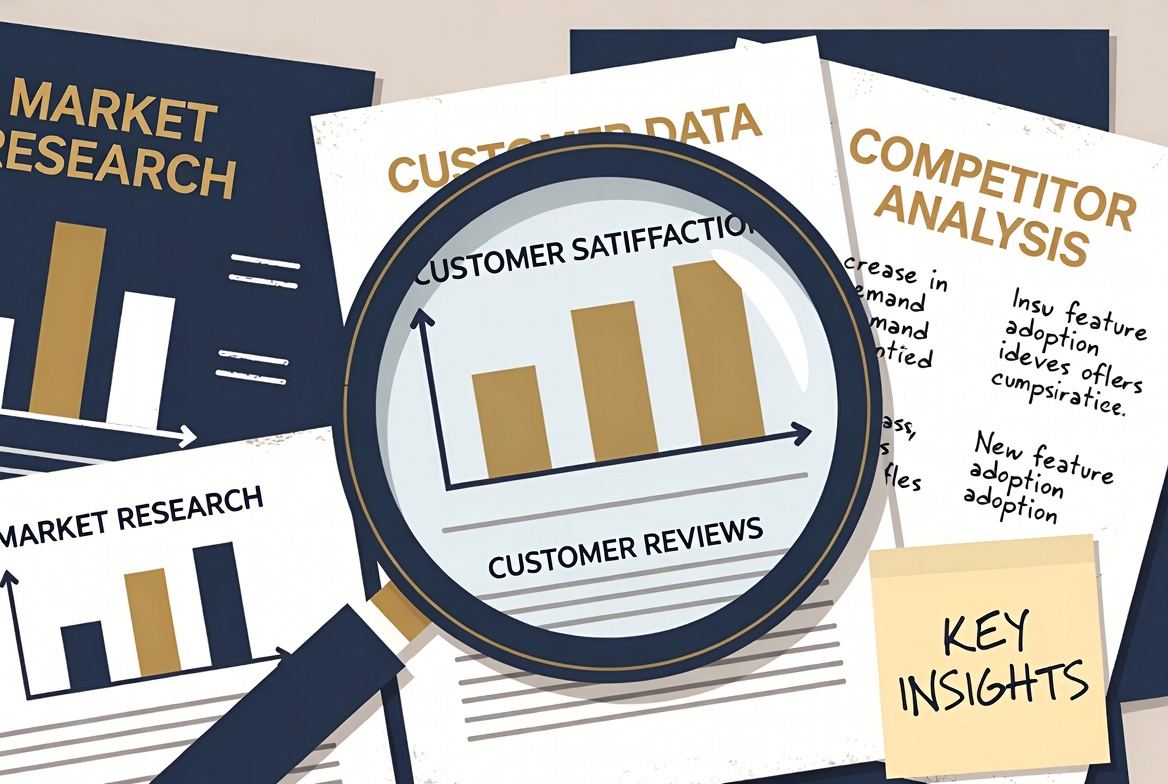
Customer interviews: Talking to your best customers to understand why they chose you, what problems you solved for them, and what almost stopped them from buying. These conversations reveal language patterns, emotional drivers, and objections you need to address.
Review mining: Combing through every customer review, testimonial, and survey you have. If you’re new, looking at what customers say about your competitors. People are surprisingly honest in reviews, and they’ll tell you exactly what matters to them—often in their own words that you can incorporate into your copy.
Competitive analysis: Not to copy what competitors are doing, but to identify gaps in the market. What are they emphasizing? What are they missing? Where can you differentiate?
Discovery interviews with stakeholders: Understanding the business from the inside. What makes you different? What do you do better than anyone else? What’s your unfair advantage? Sometimes business owners have become so accustomed to their own excellence that they don’t even realize what makes them special.
Voice of customer analysis: Looking at support tickets, sales call transcripts, and any other place where customers express themselves in their own language. This reveals the exact words and phrases your audience uses to describe their problems.
This isn’t quick work. But it’s the work that separates copy that converts from copy that just… exists.
What Research Reveals (That You’d Never Guess)
I’ve lost count of how many times the research phase has uncovered insights that completely surprised my clients.
A B2B software company thought their main selling point was their advanced features. Research revealed that customers chose them because their onboarding process was painless—they could get up and running in a day instead of a month. That became the headline.
A professional services firm was convinced clients hired them for their decades of experience. Customer interviews told a different story: clients chose them because they made complex legal issues easy to understand. We shifted the entire messaging accordingly.
A consumer product company thought their audience was motivated by price. Reviews revealed they were actually motivated by sustainability and ethical sourcing—they just needed to know that buying the product aligned with their values.
You cannot make this stuff up. You have to discover it.
The Language of Your Customer
One of the most powerful outcomes of research is discovering the exact language your customers use to describe their problems.
Here’s a quick example. Let’s say you run a financial planning service. You might describe your offering as “comprehensive wealth management and retirement planning services.”
But your research might reveal that your customers say things like, “I just want to know I won’t run out of money before I die” or “I’m terrified I’m not saving enough.”
Which language do you think will resonate more on your website?
When you use your customer’s own words and phrases in your copy, something magical happens. They feel understood. They feel like you’re speaking directly to them. That connection is what drives conversions.
You can’t achieve that by sitting in a conference room brainstorming what you think customers want to hear. You have to do the research to discover what they’re actually saying.
Research Prevents Expensive Mistakes
Here’s the thing about launching a website with copy that isn’t grounded in research: you won’t know it’s wrong until after it’s live.
You’ll pour time and money into the design and development. You’ll celebrate the launch. And then… crickets. Traffic comes in, but conversions don’t follow.
Now you’re stuck playing guessing games. Is it the headline? The value proposition? The call-to-action? You might spend months and thousands of dollars on A/B testing, trying to figure out what’s not working.
Research prevents this. It gives you a roadmap based on data, not assumptions. You’re not guessing what will work—you’re building copy on a foundation of real insights from real customers.
Does that guarantee success? Nothing does. But it dramatically increases your odds.
Research Creates Messaging That Lasts
Here’s a bonus benefit of doing the research upfront: the messaging you develop becomes a lasting asset for your business.
When you truly understand your customer’s needs, pain points, and decision-making process, that knowledge doesn’t just inform your website copy. It influences your email marketing, your sales conversations, your social media, your advertising—everything.
The research phase creates a messaging framework that your entire team can use. You’re not just getting better website copy; you’re getting clarity on how to talk about your business in every context.
The ROI of Research
I get it. Research takes time. If you’re hiring a professional copywriter, research adds to the cost of the project.
But here’s the calculation you need to make: what’s the cost of launching a website that doesn’t convert?
Let’s say you’re a service business that charges $5,000 per project. If your website converts just one additional client because the copy resonates with your audience, the research has paid for itself many times over. And that’s a conservative estimate—strong copy typically drives multiple conversions.
Or think about it this way: you’re already investing in a website redesign. The design work costs thousands of dollars. Why would you compromise that investment by putting generic, unresearched copy on your beautiful new site?
Research isn’t an optional luxury. It’s a fundamental requirement for copy that actually works.
How to Apply This
If you’re writing your own website copy, commit to doing the research first. Don’t start writing until you’ve talked to customers, read every review, and analyzed your competition.
Ask your customers open-ended questions:
- Why did you choose us over other options?
- What problem were you trying to solve?
- What almost stopped you from working with us?
- How would you describe our service to a friend?
Their answers will give you more valuable insights than any amount of internal brainstorming.
If you’re working with a copywriter, make sure their process includes substantial research. If they’re not asking to interview your customers or requesting access to your reviews and testimonials, that’s a red flag. Good copywriters know that research is non-negotiable.
The Bottom Line
Conversion copywriting isn’t about clever wordsmithing. It’s about deeply understanding your audience and speaking to their needs in their language.
That understanding only comes from research.
Yes, it takes time. Yes, it requires effort. But it’s the difference between copy that sounds good to you and copy that actually convinces your customers to take action.
The research phase is where the real work happens. It’s where you dig beneath the surface to uncover the messaging gold that will set you apart from every competitor who’s just winging it.
And in a world where everyone’s shouting for attention, that depth of understanding is what cuts through the noise.