
Transform Your Website with High ROI Copywriting Results

by | Jan 16, 2026 | Blog

ROI of Professional Website Copywriting: Case Studies and Measurable Results

Professional website copywriting delivers measurable returns by turning unclear messaging into conversion-focused content that drives leads, sales, and higher customer lifetime value. This article explains what “ROI of website copywriting” means in practical terms, why empirical case studies matter, and how to measure the financial impact of investing in expert copy. Many businesses undercount the value of strategic messaging because they treat copy as creative adornment rather than a conversion engine; the sections below show how clear positioning, headline-level value propositions, and SEO-aligned on-page copy combine to lift conversion rates and improve lead quality. You will get a definition and simple ROI formula, the key metrics to track, mechanisms by which copy increases growth, structured case-study evidence from recruiter and software engineering contexts, and an outline of a repeatable process for maximizing results. Along the way, actionable checklists, EAV tables, and practical steps help marketing leaders and founders assess, test, and validate the financial return from hiring a professional copywriter.

James Thole Copywriting appears here as a practical example of a specialist partner offering conversion-focused website copywriting and a marketing playbook that includes tagline, positioning statement, and core messaging framework. The firm’s approach emphasizes research-backed strategic messaging—not just creative writing—and delivers SEO-optimized website copy structured specifically for designers and their teams. This article keeps the topic first and uses that service information sparingly to illustrate how a disciplined process maps to measurable ROI.

What Is the ROI of Professional Website Copywriting?

ROI of website copywriting is the revenue uplift or cost savings directly attributable to improved website messaging divided by the investment in professional copy. The mechanism is straightforward: better copy increases conversion rate and lead quality, which increases the number of paying customers or average deal value over time. Measuring that ROI requires establishing a baseline, attributing a portion of incremental performance to copy changes, and calculating the financial impact over a defined timeframe. The following table clarifies the primary metrics you’ll use to quantify copywriting ROI and gives example units to make calculations concrete.

Further research supports the idea that effective copywriting directly influences sales conversion rates, especially in digital commerce environments.

E-commerce Copywriting Strategies for Sales Conversion

This study examines the effectiveness of copywriting strategies in enhancing sales conversion rates across Indonesian e-commerce platforms. As digital commerce continues to grow rapidly in Indonesia, understanding the impact of effective copywriting on consumer behavior and purchase decisions has become increasingly crucial. Through a comprehensive analysis of existing literature and data from major Indonesian e-commerce platforms, this research investigates how various copywriting elements influence conversion rates. Findings indicate that well-crafted copywriting significantly impacts sales conversion rates through multiple mechanisms.

CULTURAL ADAPTATION AND AUTOMATED SYSTEMS IN E-COMMERCE COPYWRITING: OPTIMIZING CONVERSION RATES IN THE INDONESIAN MARKET, 2024

The table below shows the core KPIs, how to measure them, and representative example values that teams can adapt to their own businesses.

MetricHow it's measuredExample value / unit
Conversion rate (visitor → lead)Leads / unique visitors × 1002.5%
Lead-to-customer conversionCustomers / qualified leads × 10012%
Average revenue per customerAverage deal value over period$4,500
Leads per monthCount of MQLs attributed to site120 leads/mo
Revenue per month (attributed)Leads × lead→customer × ARPC$64,800/mo

This EAV-style breakdown makes ROI calculations transparent and repeatable: when you know baseline conversion, lead volume, and average revenue per customer, you can model the dollar impact of even modest conversion lifts. The next section shows a step-by-step calculation you can apply immediately.

How Do You Define and Calculate Website Copywriting ROI?

Define ROI for website copywriting as: (Net incremental revenue attributable to copy) / (Cost of copy project) over a chosen time window. To calculate, establish a baseline period (e.g., 90 days), implement copy changes, measure the new performance over an equivalent period, and attribute a conservative share of lift to copy (adjusting for seasonality and other marketing activity). For example, if baseline monthly revenue from the website is $50,000, and after copy changes site-attributed revenue rises to $65,000, the incremental revenue is $15,000/month. If the copy project cost $9,000 and you conservatively attribute 80% of the lift to the copy, annualized ROI = ((15,000 × 0.8 × 12) – 9,000) / 9,000 ≈ 14.3x payback over the year. That formula requires disciplined attribution and often benefits from A/B testing to isolate messaging impact.

When attributing results, use these safeguards: run A/B tests where feasible, compare to control cohorts, and normalize for paid media or product launches. Thoughtful attribution prevents overclaiming and builds trust with stakeholders. The next subsection lists the most useful metrics for operational tracking and decision-making.

Which Key Metrics Measure Copywriting Effectiveness?

Evaluating copy effectiveness requires a mix of conversion and engagement KPIs that together indicate both quantity and quality of leads. Conversion rate and micro-conversions (CTA clicks, form starts) show direct funnel movement, while lead quality metrics (lead scoring, demo-to-close rate) reveal whether copy is attracting the right prospects. Engagement signals like time on page, scroll depth, and bounce rate are supporting evidence that messaging resonates with intent-driven visitors. For SaaS or recruiter audiences, target ranges differ: a SaaS landing page aiming at enterprise trials may accept lower traffic but seek high lead-to-deal rates, whereas recruiter sites prioritize qualified inbound contacts and reduced time-to-hire.

  1. Conversion rate for primary CTA: the percentage of relevant visitors who complete the desired action.
  2. Lead quality scores: qualitative or numeric scoring showing fit and purchase intent.
  3. Average deal size and sales velocity: how messaging impacts value and speed of conversion.
  4. Engagement metrics: time on page, scroll depth, and return visits as signals of resonance.

These metrics together form the data you’ll use in EAV modeling and ROI calculations described earlier.

Indeed, the ultimate measure of a copywriter’s success often boils down to the tangible sales and effective headlines they produce.

Measuring Copywriter Performance by Sales & Headlines

Grade your performance as a copywriter on sales generated by your copy, not on originality. But I believe professional copywriters should be able to generate headlines, concepts, and copy that sells.

The copywriter’s handbook: a step-by-step guide to writing copy that sells, 2020

How Does Professional Website Copywriting Drive Conversion and Business Growth?

Professional website copywriting drives growth by clarifying value propositions, reducing cognitive friction, and guiding visitors through a persuasive user journey that aligns with purchase intent. At the page level, effective copy uses headline-value pairs, benefits-first frameworks, and microcopy on CTAs and forms to minimize hesitation and encourage action. Over time, consistent messaging strengthens brand differentiation, increases trust, and shortens sales cycles—compounding revenue gains beyond immediate conversion lifts. Below are the two mechanisms—brand messaging and SEO—where copy has the largest measurable effect.

The following list outlines core mechanisms by which copywriting produces measurable outcomes:

  • Clear value propositions reduce bounce and increase conversion at the top of funnel.
  • Intent-aligned headlines and CTAs increase micro-conversion rates and A/B test wins.
  • Consistent messaging improves lead qualification and increases close rates downstream.

These mechanisms connect to measurement systems and CRO experiments that validate the causal impact of copy changes on revenue and pipeline.

What Role Does Strategic Brand Messaging Play in Increasing ROI?

Strategic brand messaging creates a coherent narrative that helps ideal customers self-identify and progress through the funnel faster, which improves lead quality and conversion velocity. Messaging frameworks—tagline, positioning statement, and core messages—act as meronyms of the overall brand assets; each piece (headline, proof points, microcopy) contributes to perceived value and trust. When messaging aligns with buyer pain points and product differentiation, sales teams report higher demo-to-close rates because prospects arrive better informed and already partially sold. The effect compounds because consistent messaging across paid, organic, and sales touchpoints reduces friction and improves the lifetime value of acquired customers.

To operationalize messaging, teams should translate high-level positioning into headline formulas and proof-point libraries that copywriters use on every page. This mapping from strategic narrative to on-page execution is what turns brand statements into measurable conversion outcomes and supports the next area—SEO-optimized copy that brings qualified traffic.

How Does SEO-Optimized Copy Enhance Conversion Rates?

SEO-optimized copy enhances conversion rates by attracting intent-matched visitors who are more likely to convert once they land on a relevant, persuasive page. Keyword-intent alignment ensures that organic traffic entering the funnel already has a need aligned to your product or service, raising baseline conversion rates compared with generic traffic. On-page SEO techniques—metadata, structured headings, and content that answers searcher questions—work hand in hand with persuasive messaging so that visitors find and then quickly understand the value proposition. Measuring combined SEO+CRO impact requires tracking organic traffic quality, conversion rate by channel, and downstream revenue per organic lead.

This approach is further supported by studies highlighting the critical role of internet copywriting and rewriting in optimizing content for search engines and enhancing user experience on corporate websites.

Copywriting for Corporate Websites: SEO & User Engagement

This study aims to address contemporary challenges related to online textual content, specifically focusing on texts found on corporate websites and corporate blogs. The study employs a comprehensive approach to analyze the creation of texts, considering both copywriting and rewriting techniques. The research methodology involves investigating linguistic and psycholinguistic aspects, as well as the principles underlying search engines and their role in organic website promotion. The analysis of internet copywriting and rewriting in the realm of marketing discourse reveals their significance for search engine tasks and user engagement. The study highlights the crucial connection between internet copywriting, rewriting, and successful marketing discourse, optimizing content for search engines and enhancing user experience.

Linguistic features of copywriting and rewriting in the field of text content for corporate websites: semantic aspect, A Dossanova, 2024

SEO copy acts as both traffic driver (hypernym: digital marketing) and conversion asset (hyponym: conversion copywriting). Properly implemented, it increases both the number and the quality of leads, making the copy investment multiply through ongoing organic performance improvements.

What Are the Proven Results from Website Copywriting Case Studies?

Case studies show how measured changes in copy translate into financial outcomes by documenting the problem, the approach, and the measured result. Presented as before/after comparisons, these case summaries provide the evidence marketers and executives need to justify copy investment. Below is a structured before/after table summarizing anonymized industry-specific cases that reflect common results for recruiter and engineering firms; the table is followed by short narrative takeaways that explain attribution and measurement considerations.

CaseBefore / ProblemAfter / Result
Recruiter (SaaS-focused)Low demo requests, poor lead fit68% increase in qualified demos; higher close rate
Software engineering firmHigh bounce, low contact form submissions42% uplift in contact forms; 30% more proposals issued
Niche B2B providerWeak positioning, confused value propClear messaging produced 2.5x organic trial signups

This case-style EAV table illustrates how targeted messaging and page-level optimization produce measurable improvements in leads and downstream revenue. Each case required baseline measurement, control comparison, and conservative attribution to isolate the copy’s effect.

How Did Copywriting Improve Lead Quality for SaaS Recruiters?

For SaaS recruiters, rewriting homepage and service pages to emphasize specific vertical expertise and outcome-focused proof points improved lead relevance and demo conversion. The work focused on identifying high-value client profiles and rewriting H1–H3 messaging to speak directly to those personas, while tightening CTA language for demo requests. Measurement showed not just more demo requests but a higher ratio of qualified demos—meaning fewer unqualified conversations and better use of sales time. The impact is quantifiable: higher lead-to-deal rates and lower cost per qualified lead when organic and paid channels are combined.

Attribution relied on cohort analysis and short A/B tests for headline and CTA variants to confirm the causal relationship between messaging changes and lead quality improvements.

What ROI Gains Were Achieved by Software Engineering Firms?

In software engineering firms, copy that clarified service scopes, pricing models, and developer competence reduced friction for procurement teams and increased contact form submissions from decision-makers. Changes included clearer case study summaries, explicit deliverables lists, and simplified contact flows that reduced form fields and added targeted trust signals. Results included a significant uplift in form submissions and a higher conversion of proposals to signed contracts, which translated into a measurable revenue uplift within the first six months. When modeled conservatively, ROI calculations showed payback within months rather than years.

These engineering firm outcomes demonstrate how technical clarity and targeted proof points—elements of conversion copywriting—can materially improve sales velocity and average deal size.

What Is James Thole’s Process for Maximizing Copywriting ROI?

James Thole Copywriting follows a structured process that begins with discovery, moves into strategic messaging, and ends with delivery of SEO-optimized conversion copy and a marketing playbook that enables consistent implementation. The firm’s primary product is conversion-focused website copywriting, and its deliverables typically include a positioning statement, tagline options, and a core messaging framework that teams can use across marketing channels. The approach emphasizes research and conversion principles over purely creative writing, ensuring that messaging is authentic to the business while designed to sell.

The Work with James Thole Copywriting centers on research-backed messaging and deliverables that support implementation and measurement. The process combines stakeholder interviews, competitor analysis, customer insights, headline testing, and SEO mapping to create copy that resonates with ideal customers and drives measurable conversions. Deliverables often include SEO-optimized page drafts plus a marketing playbook summarizing taglines and core message architecture to keep teams aligned during execution.

Below is a simple phase-by-phase list of process components:

  1. Discovery: stakeholder interviews, customer research, and competitive audit to identify positioning gaps.
  2. Strategy: value-proposition mapping, tagline testing, and conversion funnel alignment.
  3. Production: SEO-optimized page copy, CTA microcopy, and A/B test variants for headlines.
  4. Delivery: marketing playbook containing positioning statement and messaging framework for team consistency.

This process ties each step to measurable outcomes—research informs priority pages, copy production includes test variants, and the playbook helps retention of gains across channels.

How Does Research and Discovery Unearth Your Unique Story?

Research and discovery use direct interviews, analytics review, and competitor audits to surface the specific combination of customer pain points, product advantages, and proof that forms a unique sales narrative. Interview questions focus on buyer outcomes, decision criteria, and the language customers use to describe success; analytics reveal where visitors drop off and which pages drive the most intent signals. Mapping these inputs yields personas and messaging priorities that are translated into headline frameworks and proof-point libraries. The output is a prioritized set of pages and messaging elements that the production phase uses to maximize conversion impact.

This discovery-to-message pipeline ensures copy is not generic but tailored to the customers who actually buy, which increases lead quality and conversion efficiency.

How Are Conversion-Focused and SEO-Optimized Copy Crafted?

Crafting conversion-focused, SEO-optimized copy starts with headline formulas that pair clear benefits with specific outcomes and follows with concise sections that reduce cognitive load and support decision-making. Writers use keyword intent maps to align each page with searcher needs and integrate semantic variations to improve organic relevance. CTA placement follows conversion heuristics—primary action above the fold, contextual CTAs in content, and friction-reducing microcopy on forms. Deliverables include test-ready headline variants and metadata recommendations so that search and conversion experiments can run in parallel.

The technical checklist includes headline/value proposition alignment, 1–2 primary CTAs per page, keyword-focused subheadings, and microcopy to reduce form friction—all designed to be measurable via A/B tests and analytics.

How Can You Maximize Your Investment in Professional Website Copywriting?

To maximize copywriting ROI, treat the engagement as a strategic investment with measurable milestones rather than a one-off creative task. Preparation and internal alignment matter: share analytics and CRM data with the copywriter, align sales and marketing on target customer profiles, and commit to testing and iteration after launch. Ongoing measurement and a plan for incremental tests ensure that initial improvements compound into long-term organic gains. Below is a short, actionable numbered list designed for featured-snippet-style clarity.

  1. Share baseline analytics and lead data before work begins so attribution is possible.
  2. Prioritize high-impact pages (homepage, pricing, service landing pages) for early wins.
  3. Build A/B tests for headlines and CTAs to verify causal impact.
  4. Translate messaging into a playbook to keep consistency across channels.

These steps—data sharing, prioritization, testing, and playbook creation—form the practical core of extracting durable ROI from professional copywriting engagements.

The table below compares common investment areas, the specific action to take, and the typical benefit you can expect in ROI terms.

Investment AreaAction TakenExpected ROI / Benefit
Discovery researchCustomer interviews & analytics sharingHigher lead relevance; faster payback
SEO mappingKeyword intent alignment for target pagesIncreased qualified organic traffic
Messaging playbookTagline, positioning, core messagesConsistency across channels; improved conversion
A/B testingHeadline and CTA variantsVerified uplift; data-driven iterations

This EAV table helps teams choose where to invest first for the biggest return and supports cost-benefit conversations with stakeholders.

Why Is Professional Copywriting an Investment, Not an Expense?

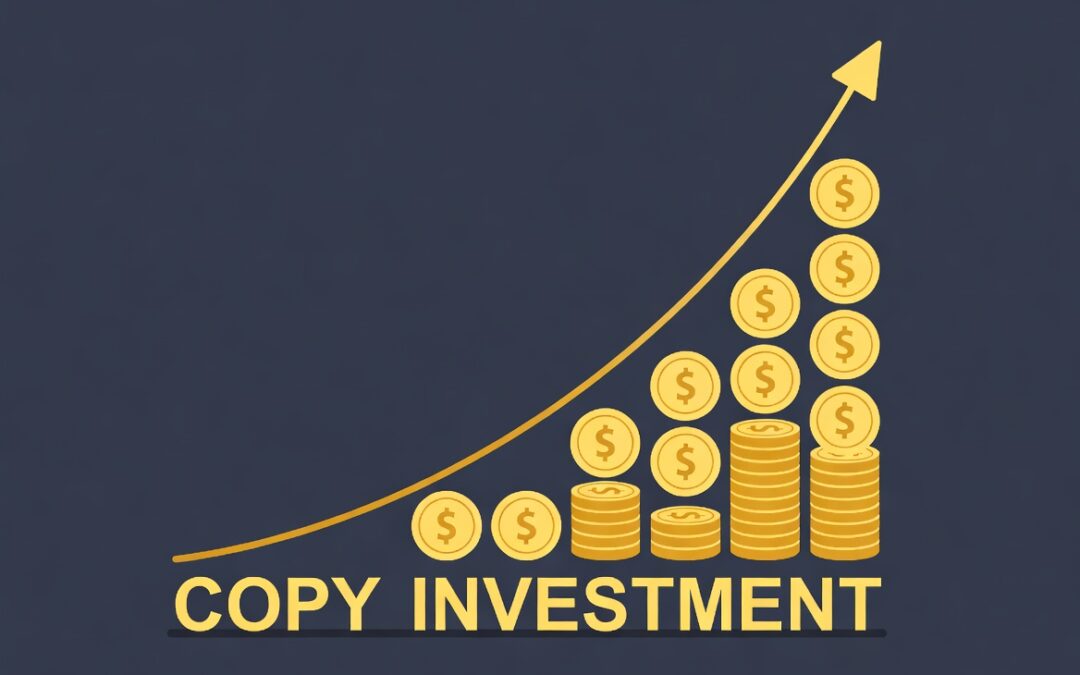
Professional copywriting is an investment because it yields recurring benefits—higher conversion rates, better lead quality, and stronger brand equity—that compound over time and reduce customer acquisition cost. Simple payback models show that a one-time copy project that lifts conversion by a few percentage points can generate several multiples of its cost within a year when annualized. Beyond direct revenue, consistent messaging reduces churn and improves upsell success by setting accurate expectations and demonstrating differentiated value. Compared to ad spend that stops producing when the budget ends, copy continues to produce organic returns and sales lift long after initial delivery.

What Common Copywriting Mistakes Hurt ROI and How to Avoid Them?

Common mistakes that reduce ROI include vague value propositions, misaligned keyword intent, overloaded pages with too many CTAs, and failure to measure results or run tests. Avoid these by adopting a simple checklist: define the primary visitor intent for each page, craft a single clear CTA, use headlines that state the specific benefit, and set up analytics goals and A/B tests before launch. Small fixes like reducing form fields, clarifying pricing cues, and adding proof points often deliver outsized returns when prioritized against traffic and intent.

A practical three-step remediation list you can apply immediately:

  • Audit top pages for single-intent alignment and eliminate competing CTAs.
  • Map keywords to pages and ensure on-page copy answers the searcher’s question.
  • Implement at least one A/B test per priority page to validate improvements.

Applying this checklist prevents common pitfalls and solidifies the financial case for professional copywriting.

This article has shown how to define, measure, and maximize the ROI of website copywriting using practical formulas, KPI frameworks, case-study evidence, and a process-oriented approach. For teams ready to translate messaging into measurable revenue, disciplined discovery, SEO alignment, and ongoing testing are the core levers that make copy an investment with predictable returns.