
Website Copy Mistakes That Cost You Customers

by | Jan 2, 2026 | Blog

Website Copy Mistakes That Cost You Customers: How to Identify and Fix Common Errors to Boost Sales and Engagement

If your website doesn’t convert, unclear or poorly structured copy is often the culprit, leaking visitors before they become customers. This guide shows how bad website copy — from vague headlines to weak calls-to-action — creates friction that reduces engagement and lowers conversion rates, and it explains practical fixes you can apply immediately. You will learn to diagnose the most common website copywriting mistakes, measure their business impact, and follow a prioritized repair roadmap that keeps designers and SEO in sync. The article maps five core areas: common copywriting errors, how poor copy affects sales, step-by-step fixes and an audit checklist, conversion-specific mistakes, and building trust through technical and readability improvements. Read on for concrete examples, EAV-style tables for quick audits, and action lists you can implement this week to stop losing customers to unclear messaging.

What Are the Most Common Website Copywriting Errors That Drive Customers Away?
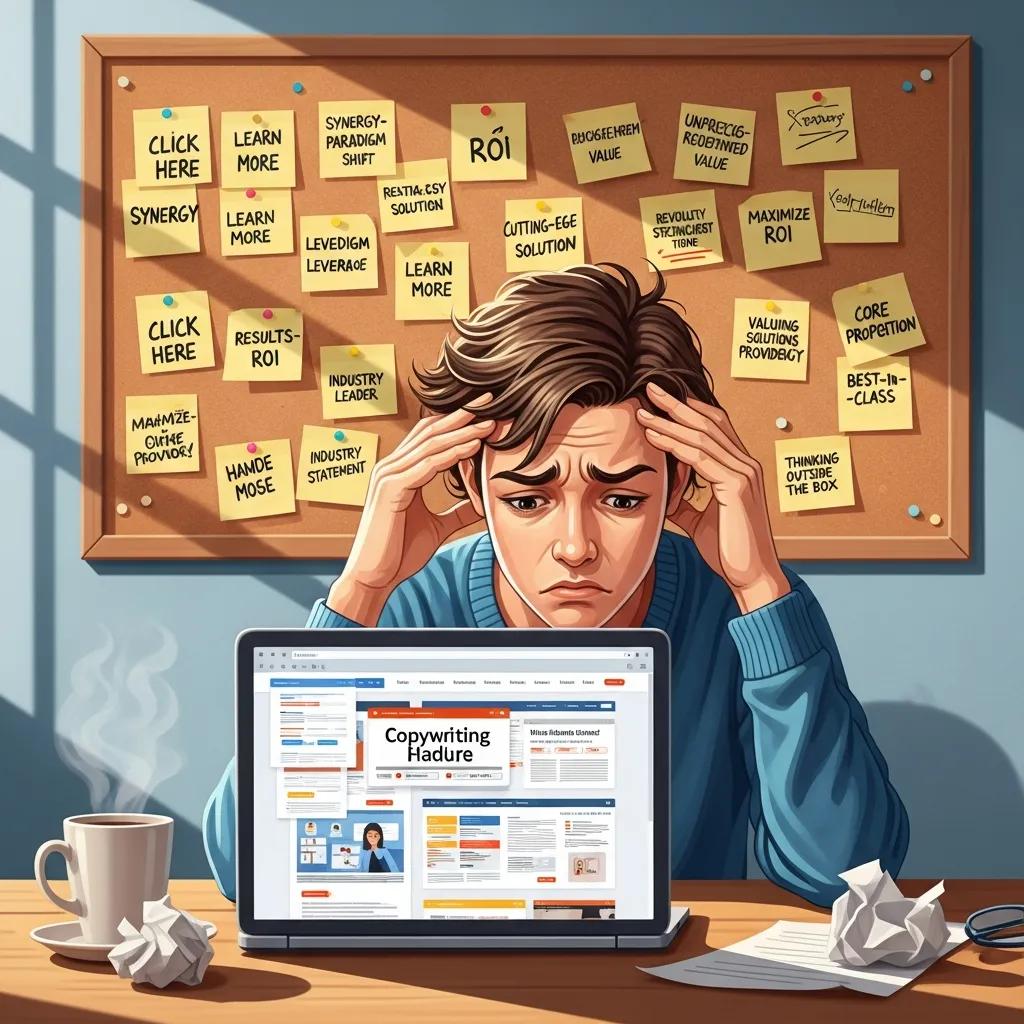
Poor website copy takes many forms, but most losses boil down to confusion, missing value, and lack of persuasive direction. These errors interrupt the customer journey by failing to answer “What’s in it for me?” within the first few seconds, which drives higher bounce rates and lower conversion rates. Identifying the specific mistake lets you choose a corrective pattern—clarify, reframe benefits, tighten CTAs, or optimize readability—and measure the change. The list below highlights the highest-impact errors so you can scan fast and prioritize fixes that recover the most revenue. After this quick list, we’ll examine headlines and benefit-focused framing that directly address two of the most damaging mistakes.

Common website copywriting errors and quick fixes:

  1. Vague headlines that fail to state a clear value: Visitors bounce when they can’t see the benefit in 3–5 seconds. Fix: lead with specific outcomes, not features.
  2. Feature-focused body copy that ignores outcomes: Features explain, benefits convert. Fix: reframe each feature as a customer outcome.
  3. Missing or weak unique value proposition (UVP): If your UVP is absent, visitors can’t choose you. Fix: create a one-sentence UVP near the hero.
  4. Weak or missing calls-to-action (CTAs): Ambiguous CTAs cause friction at decision points. Fix: use action + benefit CTAs with clear placement.
  5. Poor SEO and meta-copy that misrepresents page intent: Mismatched search intent increases bounce. Fix: align title/meta with user intent and page content.
  6. Overloaded pages with too much information: Cognitive overload prevents action. Fix: prune and prioritize, use progressive disclosure.
  7. Technical/readability errors (typos, poor formatting): Small errors erode trust rapidly. Fix: implement editorial QA and format for scanning.

These top mistakes form the core of why visitors don’t convert, and each one points to a clear remediation strategy that recovers engagement and sales.

How Do Vague Headlines and Openings Reduce Visitor Engagement?

A headline is the first semantic signal visitors use to decide whether to stay; vague headlines fail that signal by not stating clear benefits or outcomes. When a headline lacks a value proposition, the visitor’s mental model (what the page offers) doesn’t form, which triggers a fast exit or search for a clearer alternative. For example, “Solutions for Businesses” tells nothing, whereas “Cut Acquisition Cost 30% with Targeted Landing Pages” communicates benefit, metric, and action. The immediate fix is a clarity-first headline formula: outcome + metric (if available) + target audience phrase. After revising headlines, next focus on opening paragraphs that reinforce the headline with a brief reason-to-believe and a clear direction to the next step.

Research further supports that the initial clarity of a landing page significantly influences visitor perception and conversion rates, often determined in mere seconds.

Landing Page Clarity & Conversion Impact

The thesis aims to study, through a research over two versions of a landing pages, how elements composing a landing page can deviate or contribute to the overall clarity and perception of the offer proposed; by using the five second test technique and an emotional matrix to detach respondents emotions, useful patterns emerge, also quantitatively proving the meaningful change

Testing clarity and performance of two landing pages: the impact of people’s emotions and perceptions on conversions and pages’ performance, 2019

Why Focusing on Features Instead of Benefits Hurts Your Conversion Rates?

Feature-led copy lists attributes that mean little unless translated into outcomes the customer values, and this mismatch reduces motivation to act. Buyers ask, “What will change for me?” not “What does it do?” Reframing features into benefits shows the consequence of use—time saved, money earned, risk avoided—and converts abstract specs into personal value. A simple transformation: replace “24/7 monitoring” (feature) with “Sleep easier knowing your systems alert and resolve issues any time” (benefit). Once benefits are clear, the next step is aligning those outcomes with specific CTAs so visitors have a direct, low-friction path to the result you just promised.

How Does Poor Website Copy Affect Sales and Business Growth?

Poor copy reduces not only immediate conversions but also long-term customer acquisition efficiency, lifetime value, and brand equity. Confusing messaging increases funnel leakage at every stage: paid ads deliver traffic, but unclear landing pages waste ad spend; organic traffic rises but low engagement undermines ranking; email and referral campaigns falter when recipients can’t quickly understand the offer. The mechanism is simple: confusion creates friction, friction reduces action, and reduced action means fewer leads and sales. Quantitatively, small improvements in clarity often yield outsized conversion gains because they remove widespread decision friction. After understanding these mechanisms, the next section explains specific journey points where confusion typically causes abandonment.

In What Ways Does Confusing Messaging Lead to Lost Customers?

Confusing messaging breaks the promise-expectation loop: visitors expect an immediate signal that their problem will be addressed; if the headline, hero, or first paragraph fail that signal, they leave. Specific failure points include mismatched ad-to-page messaging, ambiguous product descriptions, and unclear pricing or ROI claims—each creating a micro-decision that the visitor cannot resolve quickly. Simple diagnostic tests—read the page aloud, follow a three-click path to conversion, or run a five-second usability test—reveal where expectations fail. Fixes focus on tightening headline-hero alignment, clarifying the offer, and using benefit-first microcopy so each decision point smoothly leads to the next.

How Do Weak or Missing Calls-to-Action Lower Conversion Rates?

CTAs are decisive micro-decision triggers; weak CTAs force visitors to interpret the next step rather than act, which lowers click-through and sign-up rates. Effective CTAs are clear, benefit-driven, and anchored in context: “Get pricing” is vaguer than “See your custom price in 60 seconds.” Placement also matters—primary CTAs should appear in the hero and again after every section where a decision is natural. Microcopy around CTAs (privacy notes, what to expect) reduces anxiety and increases conversions. After redesigning CTAs, measure impact with A/B tests on copy, color, and placement to validate the lift and iterate.

What Steps Can You Take to Fix Website Content Issues Effectively?

A practical roadmap repairs copy systematically: audit to identify problems, prioritize by impact vs. effort, rewrite using benefit-led frameworks, and test iteratively to validate gains. Start with a structured website content audit that scores pages on clarity, SEO alignment, CTA strength, and credibility signals. Then map quick wins (high impact, low effort) like headline rewrites and CTA fixes, followed by larger projects such as messaging frameworks or landing page redesigns. The final phase is measurement: set KPIs (CTR, bounce, conversion rate) and run controlled A/B tests to learn and scale improvements. Below is an audit EAV-style table you can use for quick scoring and action planning.

Intro to audit table: Use this Entity-Attribute-Value table to scan critical page elements and mark pass/fail or quick actions before deeper rewrites.

Page ElementAudit AttributeAction / Question
HeadlineClarityDoes the headline state a clear customer outcome?
Opening paragraphRelevanceDoes it support the headline with a reason-to-believe?
CTASpecificityIs action + benefit present (e.g., "Start free audit")?
SEO metaIntent matchDoes title/meta match user intent and page content?
ReadabilityScan-abilityAre subheads, bullets, and short paragraphs used?

This quick checklist helps prioritize where rewrites will have the biggest effect and informs the next step: aligning deliverables to business goals and designer requirements.

Service spotlight: Primary Product/Service: Website copywriting services including customer interviews, competitive analysis, stakeholder discovery, SEO-optimized website copy structured for designers, and a marketing playbook with tagline, positioning statement, and core messaging framework. Suggested Schema and entity recommendations found in Schema.org/Service, Article, and FAQPage.

After the service spotlight, the next essential step is prioritization: use an impact vs. effort matrix to sequence work so high-impact clarity fixes happen first.

Prioritization list intro: Use this compact list to sort fixes rapidly and decide what to ship first.

  1. High impact, low effort: Headline and hero CTA rewrites.
  2. High impact, medium effort: Benefit-driven product descriptions and key page rewrites.
  3. Medium impact, medium effort: SEO meta alignment and structured data.
  4. Low impact, high effort: Full-site redesigns and new templates.

This prioritized approach balances speed and value, and it leads directly into tactical best practices for writing clear, persuasive, SEO-friendly copy.

How to Conduct a Website Content Audit Checklist to Identify Copy Mistakes

A targeted audit uses consistent scoring and simple tools—analytics, session recordings, and manual reading—to surface the most damaging copy issues across pages. Score each page on a 1–5 scale for headline clarity, UVP presence, CTA strength, SEO alignment, and readability, then calculate an impact score by multiplying traffic by conversion loss to prioritize fixes. Tools like heatmaps and five-second tests reveal where attention drops, while search data uncovers intent mismatches.

Capture examples of poor vs. good copy so rewrites are specific rather than abstract, and create a task list for designers, developers, and writers to implement changes. After auditing, map outcomes into deliverables that connect directly to professional services.

Linking audit outcomes to services: Primary Product/Service: Website copywriting services including customer interviews, competitive analysis, stakeholder discovery, SEO-optimized website copy structured for designers, and a marketing playbook with tagline, positioning statement, and core messaging framework. This description explains how an audit transitions into structured deliverables that designers and marketing teams can implement.

What Are Best Practices for Creating Clear, Persuasive, and SEO-Friendly Copy?

High-converting, SEO-friendly copy follows a clarity-first principle, uses benefit-led structures, and aligns metadata to user intent—then it’s tested and iterated. Keep sentences short, lead with the customer benefit, use subheads that guide scanning, and embed target keywords naturally in headings, meta titles, and the first 100 words. Implement schema markup where appropriate to provide structured signals to search engines and to support rich results like FAQ snippets. Use persuasive elements—social proof, scarcity, and risk reversal—sparingly and authentically to support decisions rather than pressure them. The next section shows conversion-specific mistakes that still slip past many audits and how to fix them.

Which Conversion Copywriting Mistakes Commonly Undermine Your Website’s Performance?

Conversion copy errors often look subtle—too many choices, missing urgency, weak proof—but they add friction that compounds across channels and pages. These mistakes lower both immediate conversions and the quality of leads that move into sales pipelines. Addressing them requires a blend of message pruning, clearer next steps, and evidence that reduces perceived risk. Below is a compact EAV-style table that pairs common conversion mistakes with crisp fixes and example before→after snippets to make implementation straightforward.

ElementMistakeFix / Example
Hero CTAWeak: "Submit"Fix: "Get my conversion audit in 48 hours" (specific, benefit-driven)
Page copyInformation overloadFix: prune to 3 value points + supporting microcopy
Social proofGeneric testimonialsFix: add outcome-specific proof ("Saved 30% on ad spend")
FormToo many fieldsFix: reduce to essentials; use progressive profiling

This comparative view helps teams quickly translate diagnostic findings into testable copy changes and results-driven examples.

How Does Information Overload on Your Website Discourage User Action?

Information overload increases cognitive load, making it harder for visitors to identify the single next step, which reduces action rates and dilutes the value proposition. Symptoms include long blocks of unscannable text, multiple competing CTAs, and irrelevant content above the fold. The cure is ruthless prioritization: state the one core promise, support it with 3 concise proof points, and move everything else to secondary pages or accordions. Progressive disclosure keeps novices informed while allowing more knowledgeable visitors to dive deeper. After pruning, the next focus should be on surfacing the customer pain points the copy must resolve.

Studies confirm that the complexity of ad copy directly impacts consumer attitudes and their ability to process information, especially under cognitive strain.

Copy Complexity, Cognitive Load & Consumer Attitudes

The current research attempts to explain consumers’ underlying cognitive processes that occur when they read advertisements written using complex versus simple syntax. The study finds that research participants report better attitude toward advertisements written with simple syntax versus complex syntax, but when cognitive load is added, this effect disappears.

Cognitive load and syntactic complexity of printed advertisements: effects on consumers’ attitudes, H Jae, 1992

Why Is Ignoring Customer Pain Points a Critical Copywriting Error?

Ignoring pain points prevents visitors from recognizing the problem-solution fit that motivates action; copy that doesn’t name real pains leaves value implicit and unconvincing. Use customer interviews, review mining, and support transcripts to surface language customers use for their problems, then mirror that language in headlines and pain→solution→outcome sequences. Template language—problem statement, consequence, solution, results—helps structure pages so readers instantly see relevance. Once pain points are surfaced and addressed, survivors of the funnel are more likely to convert because the pathway from problem recognition to solution is explicit and believable.

How Can You Build Trust and Credibility by Avoiding Technical and Readability Mistakes?

Trust and credibility are fragile and can be eroded by small technical or readability errors; addressing these increases perceived professionalism and reduces friction at decision moments. Technical issues—slow load times, broken markup, or missing schema—reduce search visibility and user confidence, while readability problems like typos or dense formatting directly suggest low quality. Fixes include editorial QA workflows, formatting rules for scanning, and implementing structured data (schema) to signal authority to search engines. The table below links common technical/readability issues to business impact so teams can weigh fixes against revenue risk.

ComponentTechnical IssueBusiness Impact
Page speedSlow load timesHigher bounce rates; lost mobile conversions
GrammarTypos and errorsReduced credibility; lower trust in offers
SchemaMissing structured dataFewer rich results; lower organic CTR
FormattingDense paragraphsDecreased scan-ability; lower engagement

Understanding these impacts helps prioritize QA and technical fixes that directly support conversion improvements.

What Impact Do Spelling and Grammar Errors Have on Brand Credibility?

Spelling and grammar errors signal sloppiness and erode trust quickly, especially on pages where purchase decisions and lead submission occur; a single glaring typo can invalidate other persuasive claims. Implement a lightweight editorial process: spellcheck, paired proofreading, and a final read aloud for critical pages, plus a style guide for voice and tone. Use consistent formatting—short paragraphs, subheads, bullets, and bolded key phrases—to increase scan-ability and comprehension. Assign editorial ownership and a cadence for reviews so quality is maintained over time, and then link these quality controls to conversion metrics to prove the ROI of careful editing.

Service call-to-action: Primary Product/Service: Website copywriting services including customer interviews, competitive analysis, stakeholder discovery, SEO-optimized website copy structured for designers, and a marketing playbook with tagline, positioning statement, and core messaging framework. This offering is the recommended next step for teams that identify the mistakes above and need a structured, measurable rewrite plan.

  1. Next-step checklist for teams:
    Audit: Score pages and identify top 3 quick wins.Rewrite: Implement benefit-first headlines and CTAs.Test: Run A/B tests on prioritized pages.Scale: Apply winning patterns site-wide.
  2. Quick reasons to act now:
    Faster fixes yield immediate conversion improvements.Priority repairs protect ad spend and SEO traffic.Clear messaging compounds across funnels for long-term growth.


These tactical steps, combined with the audit and QA processes above, give you a replicable path to stop losing customers to unclear website copy.