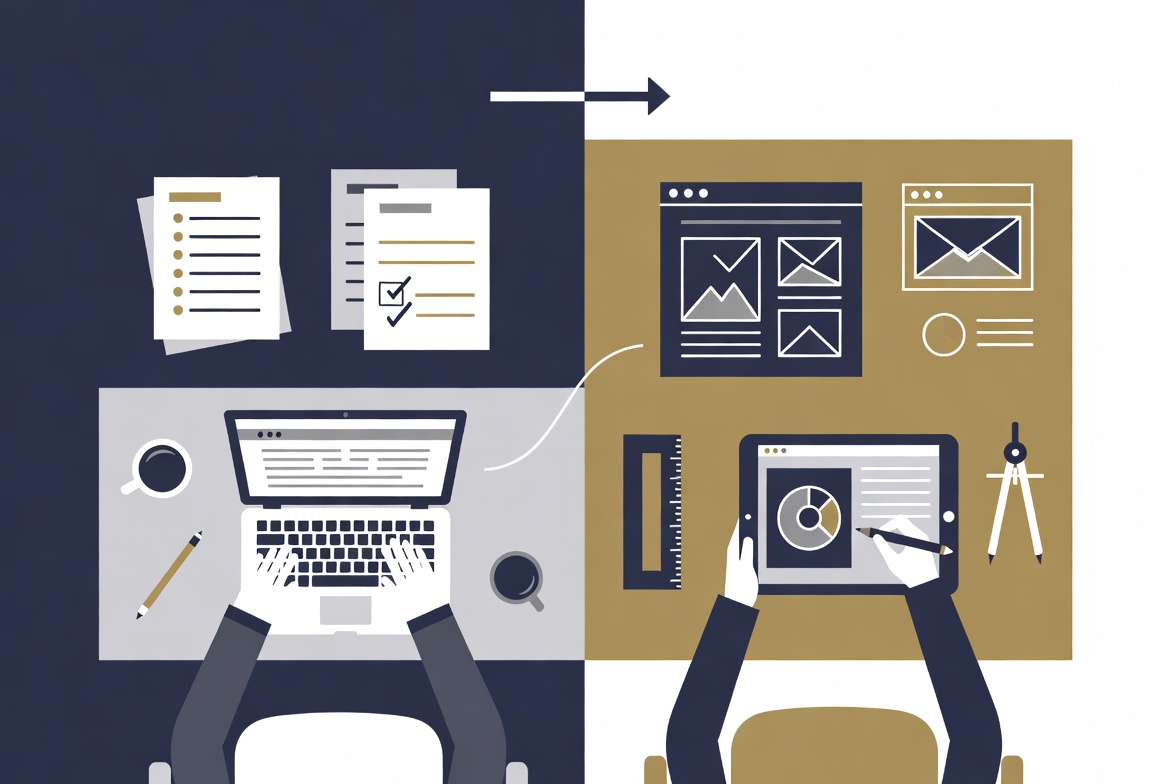
There’s a common misconception in the web design world: design and copy are separate tracks that somehow magically come together at the end.
The designer creates beautiful layouts and wireframes with lorem ipsum placeholder text. Meanwhile, the copywriter writes compelling content in a vacuum, without seeing how it’ll actually appear on the page. Then everyone crosses their fingers and hopes it all fits together when the site goes live.
This approach is like building a house where the architect and the interior designer never talk to each other. Sure, you might end up with a functional building. But you’re missing the opportunity to create something truly great.
After years of working with web designers and agencies, I’ve learned that the best websites happen when copywriters and designers collaborate from the start. Here’s why this partnership matters and how to make it work.
The Problem with Working in Silos
Let’s walk through what typically happens when copy and design are developed separately.
The designer creates a stunning homepage layout. There’s a hero section with a headline and subheadline. Below that, three benefit boxes that need 20-30 words each. Then a testimonial section that fits one quote, maybe two if they’re short.
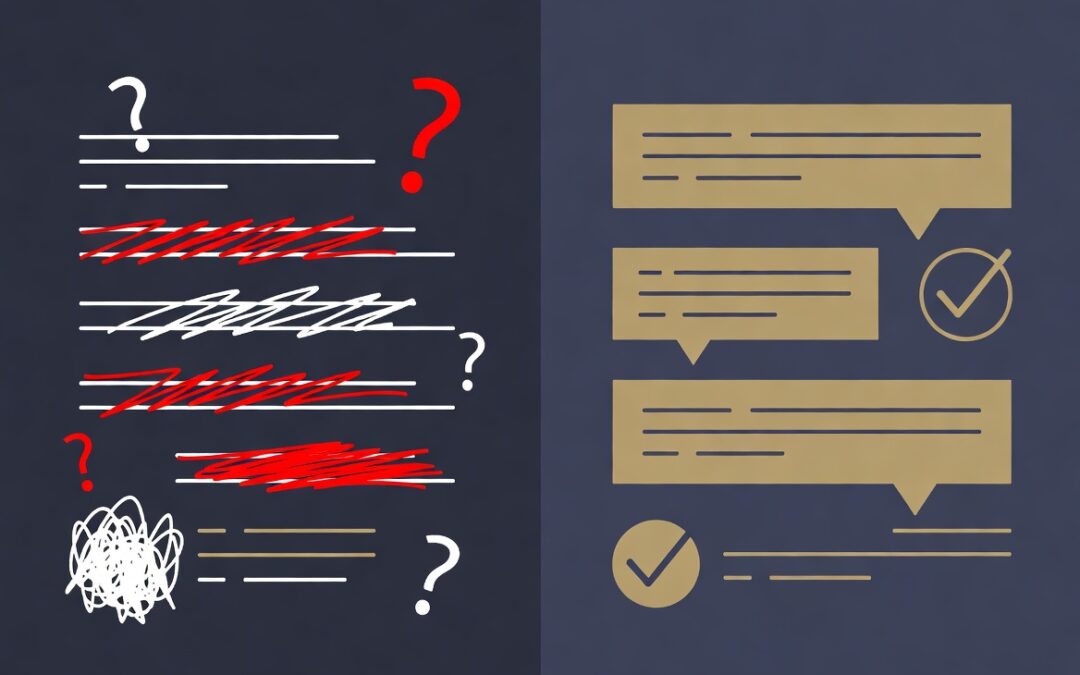
The copywriter, working separately, writes copy focused on conversion. The headline is great but six words longer than the design can accommodate. The benefit descriptions are perfect but too long for the boxes. The testimonials are compelling but include too much context to fit the allotted space.
Now you’re stuck. Do you compromise the design to fit the copy? Cut the copy to fit the design? Neither option is ideal, and both result in a weaker final product.
This isn’t anyone’s fault. It’s a structural problem with the workflow. When copy and design develop in isolation, they’re optimizing for different things. The designer is optimizing for visual balance and user flow. The copywriter is optimizing for conversion and clarity.
Both are doing their job well—they’re just not doing it together.
Why Copy and Design Need Each Other
Great website copy and great web design aren’t separate entities. They’re two sides of the same coin, both working toward the same goal: guiding visitors to take action.
Think about it this way:
Design tells visitors where to look. Copy tells them what to think about what they’re seeing.
Copy provides the message. Design provides the environment that makes that message clear and compelling.
Design creates the emotional response. Copy articulates the rational case.
When these two elements work together from the beginning, each one makes the other better.
A designer who understands the messaging hierarchy can create layouts that emphasize the most important copy. They can plan appropriate white space around key messages. They can design visual breaks that match natural pauses in the narrative.
A copywriter who understands the design constraints can write with the layout in mind. They can vary sentence length to create visual rhythm. They can write headlines that work with the available space while still being compelling.
This isn’t about compromise. It’s about creating something better than either discipline could achieve alone.
The Ideal Workflow: Starting with Strategy
The best website projects start with everyone at the table—designer, copywriter, and client.
Before anyone opens Figma or starts writing, there needs to be alignment on:
Goals: What does this website need to accomplish? Lead generation? E-commerce sales? Building authority?
Audience: Who are we talking to? What do they care about? What’s their decision-making process?
Key messages: What are the three to five most important things we need to communicate?
Differentiation: What makes this brand unique? How do we express that visually and verbally?
When everyone understands these foundational elements, both the design and copy can develop in service of the same strategy. The designer isn’t just creating something that looks good—they’re creating an environment that delivers specific messages to a specific audience. The copywriter isn’t just writing clever copy—they’re crafting messages that will work within a specific visual context.
This shared understanding sets the stage for real collaboration.
Content-First Design (Or at Least, Content-Informed)
There’s a design philosophy called “content-first design” that puts the actual content at the center of the design process. Rather than designing beautiful empty boxes and hoping the content fits, you design around real content.
This doesn’t mean the copy has to be 100% final before design begins. But it does mean having enough content to understand:
- How much copy will live on each page
- The hierarchy of information
- The tone and personality of the brand
- Key messages that need visual emphasis
Even rough draft copy is better than lorem ipsum. It gives the designer something real to work with. They can see how much space a headline actually needs. They can identify which sections are copy-heavy and need more breathing room. They can find natural places for visual elements that complement the message.
Some of the best projects I’ve worked on started with the copywriter delivering structured outlines or rough drafts, which the designer then used to create initial concepts. Then the copy and design evolved together through revision rounds, each informing the other.
What Good Collaboration Actually Looks Like
When copywriters and designers collaborate effectively, it doesn’t mean they’re in constant communication about every little detail. That would be exhausting and inefficient.
Instead, it means:
Early alignment: Both parties understand the strategy, goals, and brand positioning before work begins.
Shared visibility: The copywriter can see design concepts. The designer can see copy drafts. No surprises when things come together.
Mutual respect for constraints: The copywriter understands that a headline needs to be scannable and fit the design. The designer understands that conversion copy sometimes needs more words to be effective.
Iterative refinement: Both copy and design go through revision rounds together. A design tweak might inspire a copy refinement. A copy revision might suggest a different layout approach.
Direct communication: When there’s a conflict—the copy is too long or the design doesn’t support the message—they work it out together rather than making decisions in isolation.
This collaboration doesn’t slow down the project. If anything, it speeds it up because you’re not dealing with last-minute copy-doesn’t-fit crises.
Common Scenarios and How Collaboration Solves Them
Scenario 1: The Headline That’s Too Long
Without collaboration: The designer tells the copywriter to make it shorter. The copywriter cuts words, sacrificing clarity or impact.
With collaboration: They discuss what the headline needs to communicate. Maybe the designer adjusts the layout to accommodate a longer headline. Or maybe the copywriter finds a way to convey the same meaning more concisely. Or maybe they move some information to the subheadline. The solution serves the strategy, not just one discipline.
Scenario 2: The Testimonial Section
Without collaboration: The designer creates space for three testimonials of equal length. The copywriter has three great testimonials, but one is much longer because it tells a compelling story. They end up cutting the best part to make it fit.
With collaboration: The designer sees the testimonial and adjusts the layout—maybe one testimonial gets featured more prominently, or they create a scrolling section that can accommodate varying lengths. The best content gets the prominence it deserves.
Scenario 3: The Call-to-Action
Without collaboration: The designer creates a button with room for two or three words. The copywriter wants to write “Schedule Your Free Website Copy Consultation” because it’s more specific and compelling than “Contact Us.”
With collaboration: They work together to find the right balance. Maybe it becomes “Schedule Free Consultation” on the button with clarifying copy nearby. Or maybe the design adjusts to accommodate the fuller CTA. The result is both visually clean and conversion-focused.
Tips for Designers Working with Copywriters
If you’re a designer, here’s how to set up effective collaboration:
Share your design concepts early. Even rough wireframes help the copywriter understand the constraints and opportunities.
Explain your reasoning. When you need copy to be a certain length, explain why. “This needs to be 40 words or less because longer copy breaks the visual rhythm” is more helpful than “make it shorter.”
Be flexible where possible. Sometimes an extra line of copy or a longer headline really does convert better. If the research backs it up, consider adjusting the design.
Ask questions. If the copy seems too long or off-brand, ask the copywriter about it. There might be a strategic reason you’re not seeing.
Tips for Copywriters Working with Designers
If you’re a copywriter, here’s how to be a better collaborator:
Write with design in mind. Vary your paragraph lengths. Use subheadings to create natural visual breaks. Think about how the copy will look on the page, not just how it reads.
Provide context. When you write something that seems to break the mold—a longer headline, an unconventional structure—explain why. “This headline is longer, but research showed customers needed this level of specificity to understand the offer.”
Be willing to edit. If something genuinely doesn’t fit, be open to reworking it. Sometimes you can convey the same message more concisely.
Respect visual hierarchy. Understand that not all copy can be the same size or visual weight. Work with the designer to ensure the most important messages get the most visual emphasis.
The Bottom Line
Websites are not assembly lines where design and copy are separate components that get bolted together at the end. They’re integrated systems where every element reinforces every other element.
When copywriters and designers work together from the start—sharing strategy, understanding each other’s constraints, and refining their work collaboratively—the result is always better than what either could create alone.
The copy is more effective because it’s written for the actual design context. The design is more powerful because it’s built around real messages that serve a clear purpose.
Your website deserves that level of integration. Your visitors deserve that level of thoughtfulness. And honestly, both your copywriter and your designer deserve to do their best work.
That only happens when they work together.