
Walk into any Starbucks in the world and you’ll recognize it immediately. Not just by the green logo or the layout—but by how they talk. The handwritten menu boards. The friendly banter. The way they call out drink orders. It’s distinctly Starbucks.
Now imagine if that same Starbucks started talking like a law firm. Formal. Distant. Full of corporate jargon.
You’d feel it immediately. Something would be off. Because brand voice isn’t just about what you say—it’s about how your brand sounds, feels, and shows up in the world.
Most businesses know they need “good copy.” Fewer understand they need a consistent brand voice. And even fewer know how to actually develop one.
Let’s fix that.
What Brand Voice Actually Is (And Isn’t)
Brand voice is the personality and emotion infused into your company’s communications. It’s how you sound across every touchpoint—your website, emails, social media, customer service interactions, and even your invoices.
Brand voice is not:
- Your logo or visual identity (that’s brand design)
- Your mission statement (that’s your purpose)
- Your tagline (that’s messaging)
- Your unique value proposition (that’s positioning)
Those things are important. But your brand voice is what brings them all to life through language.
Think of it this way: if your brand were a person walking into a party, how would they introduce themselves? Would they be warm and enthusiastic? Professional but approachable? Authoritative and no-nonsense? Playful and irreverent?
That personality—consistent across all your communications—is your brand voice.
Why Brand Voice Matters More Than You Think
In a world where everyone’s shouting for attention, consistency builds recognition. When your brand voice is distinct and consistent, people start to recognize you before they even see your logo.
But there’s something deeper at play.
Your brand voice builds trust. When you sound the same across every interaction, customers feel like they know you. They understand what to expect. That familiarity creates comfort, and comfort creates trust.
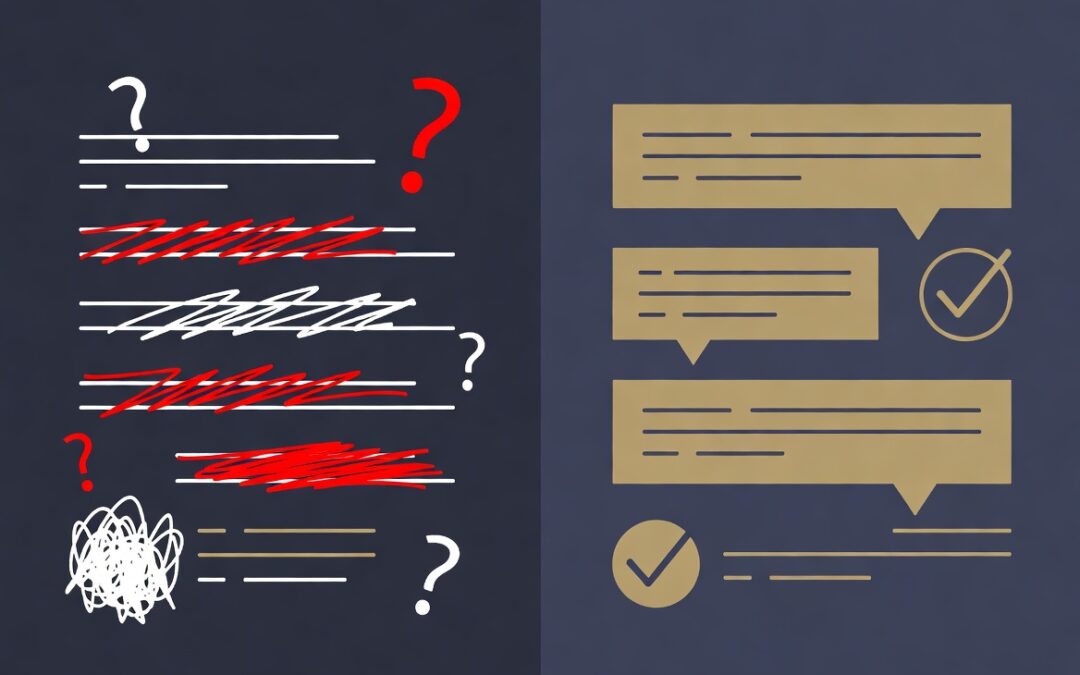
Inconsistent brand voice does the opposite. If your website sounds corporate but your emails are casual, or your social media is playful but your customer service is robotic, you’re creating cognitive dissonance. People don’t know which version is the “real” you.
Beyond trust, brand voice is how you differentiate in crowded markets. Consider this: thousands of companies offer similar services. They have similar features, similar pricing, similar benefits. What makes someone choose one over another often comes down to connection—and you create that connection through voice.
The Elements of Brand Voice
Developing a brand voice starts with defining its key characteristics. Most effective brand voices can be described using three to five core attributes.
Here are common brand voice attributes (choose the ones that fit your brand):
Professional vs. Casual: Do you use formal language or conversational tone? “We would be delighted to assist you” vs. “We’d love to help out.”
Authoritative vs. Collaborative: Do you position yourself as the expert telling people what to do, or a partner helping them figure it out? “You need to do X” vs. “Let’s explore your options together.”
Serious vs. Playful: Is your brand all-business or do you inject humor and levity? This doesn’t mean you can’t be professional and playful—many brands pull this off beautifully.
Informative vs. Inspirational: Do you focus on facts and data, or do you appeal to emotions and aspirations?
Respectful vs. Irreverent: Do you play by traditional rules or challenge conventions?
The key is picking attributes that are:
- Authentic to who you actually are as a company
- Appealing to your target audience
- Differentiated from your competitors
How to Actually Develop Your Brand Voice
Theory is nice. Let’s get practical. Here’s a process for developing your brand voice that actually works.
Step 1: Audit Your Current Voice
Start by gathering examples of your current communications:
- Website copy
- Email campaigns
- Social media posts
- Sales presentations
- Customer service scripts
Read through them honestly. Do they sound like they’re from the same company? What personality comes through? Is that intentional or accidental?
Also look at customer feedback. Do they describe your communication as helpful? Confusing? Friendly? Cold? Their perception matters more than your intention.
Step 2: Define Your Brand Personality
Ask yourself:
- If your brand were a person, how would you describe their personality?
- What three adjectives best capture how you want to be perceived?
- Who in your organization best embodies the brand when they communicate?
- What brands (not necessarily competitors) do you admire for their voice?
Get specific. Don’t just say “professional”—everyone says professional. Say “professionally warm” or “professionally direct” or “professionally accessible.”
Step 3: Identify Your Audience’s Language
This is crucial: your brand voice needs to resonate with your specific audience.
A brand targeting Fortune 500 executives will sound different than a brand targeting creative freelancers. Neither is wrong—they’re just speaking to different people.
Do research:
- How does your audience talk? What words do they use?
- What tone do they respond to? Formal or casual?
- What communication style builds trust with them?
- What turns them off?
Your brand voice should feel like a natural conversation with your ideal customer.
Step 4: Create Voice Guidelines
Now document what you’ve learned. Your voice guidelines should include:
Voice attributes: Those three to five characteristics we discussed earlier.
Do’s and Don’ts: Concrete examples of what your voice sounds like and doesn’t sound like.
For example:
- Do: Use contractions (we’re, you’ll, don’t)
- Don’t: Use corporate jargon or buzzwords
- Do: Lead with benefits before features
- Don’t: Use passive voice
Vocabulary choices: Are there specific words you always use or never use? For example, maybe you say “customers” not “clients,” or “website” not “site.”
Sentence structure: Short and punchy? Longer and flowing? A mix?
Example passages: This is the most useful part. Show don’t just tell. Provide before-and-after examples of copy transformed to match your voice.
Step 5: Apply It Consistently
A brand voice guide sitting in a Google Drive folder helps no one. The real work is implementation.
Train your team on the brand voice. Make sure everyone who writes anything—marketing, sales, support—understands the guidelines.
Review all communications through the lens of voice. Does this email sound like us? Does this social post match our personality? If not, revise it.
Over time, this becomes natural. The voice becomes ingrained in how your team thinks and communicates.
Common Brand Voice Mistakes to Avoid
Mistake 1: Trying to appeal to everyone
When you try to sound like everything to everyone, you end up sounding like nothing to no one. Pick your lane. Some people won’t resonate with your voice—that’s okay. The right people will connect deeply.
Mistake 2: Confusing brand voice with tone
Brand voice is consistent. Tone adapts to context. Your voice might be “friendly and straightforward,” but your tone in a celebration email is different from your tone in a service outage notification. Same voice, different tones.
Mistake 3: Choosing a voice that doesn’t match reality
If your brand voice guide says “warm and personal” but your actual customer service is robotic and scripted, you have a problem. Your voice needs to be authentic and deliverable across all touchpoints.
Mistake 4: Making it too complicated
Brand voice should be intuitive, not a 50-page document. If your team needs to reference a manual every time they write an email, you’ve overcomplicated it.
Mistake 5: Never evolving
Your brand voice should be consistent, not static. As your company grows and your market evolves, your voice might mature. That’s okay—just make sure changes are intentional, not accidental.
Real-World Brand Voice Examples
Let’s look at how some brands execute distinct voices:
Mailchimp: Friendly, helpful, slightly quirky. They use casual language but remain professional. “Send better email” is more approachable than “Enterprise email marketing solutions.”
Patagonia: Authentic, outdoorsy, environmentally conscious. Their voice matches their values. They’re not afraid to take stands, and their language reflects that conviction.
Apple: Simple, confident, aspirational. They don’t use technical jargon. They focus on experience and benefit. “Think different” captures their entire voice in two words.
Innocent Drinks: Playful, humble, conversational. They crack jokes on their packaging. Their voice makes smoothies fun, which differentiates them in a health-focused market.
None of these voices are “right” or “wrong.” They’re just right for their brand and their audience.
How to Know If Your Brand Voice Is Working
You’ll know your brand voice is working when:
Consistency happens naturally. Your team doesn’t need to constantly check the guidelines—they’ve internalized the voice.
Customers quote you back to yourself. They pick up on your language and use it when talking about your brand.
Recognition is immediate. People can tell it’s your content before they see your logo.
Connection deepens. Customers tell you they “feel like” they know you, even if they’ve never met you.
Differentiation is clear. You sound distinctly different from competitors, and that difference attracts the right people.
The Bottom Line
Your brand voice is one of your most valuable assets. It’s how you show up, how you’re remembered, and ultimately how you connect with the people who matter most to your business.
Developing a strong brand voice takes thought, strategy, and discipline. But once you have it—once you’ve found that unique way your brand sounds in the world—everything else becomes easier.
Your marketing feels more cohesive. Your team has clearer direction. Your customers feel more connected.
And in a world where everyone’s saying similar things, the way you say it becomes your competitive advantage.
That’s the power of brand voice.