You’ve finally pulled the trigger on a website redesign. The decision wasn’t easy—it required budget approval, stakeholder alignment, and convincing everyone that yes, the current site really is holding you back.
Now you’re excited. New design. Modern layout. Better user experience. Mobile responsive. Fast load times. Everything your current site isn’t.
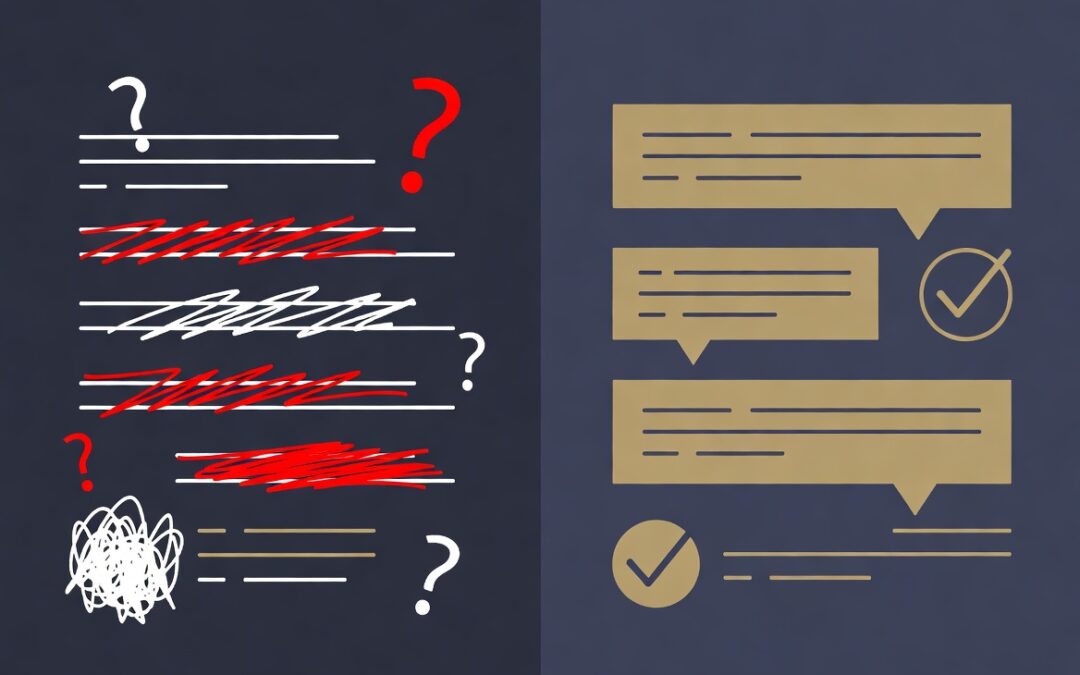
There’s just one problem: most businesses planning a website redesign focus exclusively on the visual elements while completely ignoring the words.
The plan is simple: take the old copy, drop it into the new design, maybe clean up a few typos, and launch.
This is a massive missed opportunity. And potentially an expensive mistake.
Here’s why your website redesign is the perfect time to invest in new copy—and what happens when you don’t.
The Problem with Reusing Old Copy
Let’s be honest about your current website copy. When was it written? Three years ago? Five? Ten?
A lot has changed since then:
- Your business has evolved
- Your services have expanded or shifted
- Your target customer might be different
- Your competitive landscape has transformed
- Your brand positioning has matured
- Digital marketing best practices have advanced
Your old copy reflects who you were when it was written, not who you are now. It addresses problems your customers faced years ago, not the challenges they face today. It uses positioning that made sense in a different market context.
Even if the old copy was great when it was written (and let’s be real, it probably wasn’t), it’s almost certainly no longer optimal.
Dropping outdated copy into a fresh new design is like putting old, worn tires on a brand new car. Sure, it’ll work. But why would you compromise your investment like that?
Your Website Redesign Is Already Expensive
I hear you thinking: “A redesign is already stretching my budget. Now you want me to spend more on new copy?”
Yes. And here’s why that makes financial sense.
You’re already investing thousands—maybe tens of thousands—in a new website design. That’s a significant commitment. The goal is presumably to get better results: more leads, more sales, more growth.
But your design can’t do that alone. Design gets people’s attention and guides them through your site. Copy convinces them to take action.
Think of it this way: your design is the storefront that gets people through the door. Your copy is the salesperson that closes the deal. Would you invest in a beautiful new store but leave an unprepared, outdated sales team on the floor?
Probably not. Yet that’s exactly what happens when businesses redesign their site with old copy.
The incremental cost of professional copywriting—typically 15-25% of your total redesign budget—protects your entire investment. It ensures that your new site actually delivers the results you’re hoping for.
What Typically Happens When You Don’t Update Copy
Let me walk you through a common scenario I’ve seen dozens of times.
A company spends $20,000 on a beautiful website redesign. The new site launches. Everyone celebrates. It looks amazing.
Three months later, reality sets in: traffic hasn’t changed much, and conversions are flat or maybe marginally better. The beautiful new design isn’t delivering the hoped-for results.
Now they’re stuck. They can’t go back to leadership and say “we need to spend more money on the website we just launched.” So they live with underperforming copy for another few years until the next redesign cycle.
Meanwhile, they’re losing conversions every single day because the messaging doesn’t resonate, doesn’t differentiate, or doesn’t overcome objections effectively.
This is the expensive outcome of treating copy as an afterthought during a redesign.
The Opportunity of a Redesign
Here’s the flip side: a website redesign is the perfect opportunity to get your messaging right.
You’re already committed to the project. Stakeholders are engaged. Budget has been allocated. The project has momentum. This is your window to make meaningful improvements.
It’s also a forcing function. When you redesign your site, you have to confront your messaging. You can’t just let it drift along like you might otherwise.
Smart businesses use their redesign as an opportunity to:
Revisit positioning: How do we want to be perceived in the market? What makes us different? How has that changed since our last site launch?
Refresh messaging: Are we still talking about the same problems our customers face? Are we using language they actually use?
Align with current reality: Does our copy reflect our current services, processes, and capabilities?
Implement conversion best practices: Modern website copy is more strategic than what passed for good copy five or ten years ago. A redesign is your chance to implement current best practices.
Create consistency: Your design will be cohesive and modern. Shouldn’t your messaging be equally polished and consistent?
Why Designing with Real Copy Matters
There’s another critical reason to invest in copy before or during your redesign: your designer needs real content to create an effective design.
When designers work with lorem ipsum or placeholder text, they’re designing in a vacuum. They don’t know:
- How much copy will actually be on each page
- What messages need the most emphasis
- Where natural breaks in content should occur
- What headlines will actually say
This often leads to designs that look great but don’t quite work when real copy goes in. Suddenly the headline is two lines longer than the design accommodated. The carefully balanced three-column layout needs four columns. The elegant whitespace gets cramped.
Now you’re making compromises—either to the design or to the copy—that weaken both.
When your designer has real copy to work with (even if it’s draft copy that will be refined), they can:
- Create layouts that actually fit the content
- Emphasize the most important messages visually
- Build in appropriate white space around key copy
- Design with the narrative flow in mind
The result is a website where design and copy work together seamlessly, not fighting against each other.
The Right Timing for Copy in a Redesign
So when should you develop your new copy? Here are the typical approaches:
Before design begins (ideal): This gives your designer real content to work with. They can create designs that perfectly accommodate your messaging. This is how the best projects typically flow.
In parallel with design (good): Copy and design develop simultaneously with regular check-ins. This works well when you have strong collaboration between your copywriter and designer.
After initial design concepts (acceptable): Designer creates concepts with estimated content volume, copywriter writes to fit the structure, then both refine together. Less ideal but can work if everyone’s flexible.
After design is final (problematic): This is the scenario where compromise becomes necessary. Copy must fit into rigid design constraints, or design must be adjusted post-finalization. Neither is optimal.
The earlier you bring copywriting into your redesign process, the better the final result will be.
What New Website Copy Should Include
If you’re committing to new copy as part of your redesign, what should it include? At minimum:
Homepage: This is your most important page. It needs strategic messaging that hooks visitors immediately.
Service/Product pages: Each offering needs clear, benefit-focused copy that helps visitors understand what you do and why they should care.
About page: This is often your second most-visited page. It needs to build trust and credibility while staying focused on your customers.
Contact/CTA pages: Even your calls-to-action need strategic copy that removes friction and encourages action.
Depending on your site, you might also need:
- Case studies or portfolio pages
- FAQ or resources section
- Blog content strategy
- Email templates that match your site messaging
The investment isn’t just in individual pages—it’s in a cohesive messaging strategy across your entire site.
Budget Considerations
Here’s a rough framework for budgeting copy in your redesign:
Design budget: $10,000-50,000 (varies widely) Copy budget: 15-25% of design budget
For a $20,000 design project, budget $3,000-5,000 for professional copywriting. For a $40,000 design project, budget $6,000-10,000.
This might seem like a lot, but remember: you’re not just buying words. You’re buying:
- Strategic positioning
- Customer research
- Competitive analysis
- Conversion-focused messaging
- An asset that will work for years
The alternative—launching an expensive new design with weak copy—is much more costly in the long run.
When You Can Skip New Copy
Are there situations where reusing old copy is okay? Yes, a few:
Your current copy is less than two years old and performing well. If you recently invested in professional copywriting and your conversion rates are strong, you might just need minor updates.
You’re doing a minor refresh, not a full redesign. If you’re just updating colors and fonts but keeping the same structure, new copy might be overkill.
Your business hasn’t changed at all. If your services, target market, and positioning are identical to when your copy was written, you might be fine with the existing content.
But be honest with yourself. Most businesses evolve more than they realize. And most “old copy that’s performing well” could perform better with strategic updating.
How to Make It Happen
If you’re convinced that your redesign needs new copy, here’s how to make it happen:
Include it in your initial project scope. Don’t treat it as an afterthought. Budget for it from the start.
Hire your copywriter before or alongside your designer. This enables collaboration and ensures copy is available when design needs it.
Allocate enough time. Good copywriting takes time—research, drafting, revisions. Don’t expect quality work on a rushed timeline.
Choose a copywriter who understands web design. They need to write with design constraints and user experience in mind.
Plan for collaboration between copywriter and designer. They should be talking to each other, not working in silos.
The Bottom Line
Your website redesign is a significant investment. It’s meant to deliver better results—more leads, more sales, more credibility.
But design alone can’t deliver those results. You need strategic, conversion-focused copy that works with your new design to guide visitors toward action.
Reusing old copy in your new design is like reusing old tires on a new car—it technically works, but it undermines your investment and puts you at risk of not getting the performance you paid for.
The incremental cost of professional copywriting during your redesign is small compared to the total project budget. But the impact on your results can be dramatic.
If you’re already committed to investing in a website redesign, protect that investment by getting the words right too. Your future self—and your conversion rate—will thank you.
Otherwise, you’ll be back here in a few years, looking at another redesign, wondering why the last one didn’t deliver the results you expected.
And I think we both know what the answer will be.